Every other year, the UNC Department of Music hosts Festival on the Hill, an event that brings students, faculty, guest artists, and community members together for performances, research presentations, and conversations on campus. In April 2026, the festival centered on the theme “Speak, Listen,” a concept that shaped both the programming and the broader vision for the weekend. Organized by faculty members Dr. Nicholas DiEugnio and Professor Mimi Solomon, with additional help from Dr. Naomi André, the festival’s theme reflects the focus on elevating meaningful musical voices.
Professor Mimi Solomon explained that the festival was “a chance to bring forth different voices that aren’t often heard and deserve to be.” Those voices included composers, contemporary artists, and musicians within UNC’s Department of Music.
The 2026 installment also coincided with the 250th anniversary of the founding of the United States. In a written statement, Dr. Nicholas DiEugenio spoke of “the American condition,” which has allowed composers such as Ruth Crawford Seeger, Amy Beach, Margaret Bonds, Dorothy Rudd Moore, Harry Partch, Conlon Nancarrow, George Crumb, and Duke Ellington to create their music.

At the center of this year’s festival program was the North Carolina premiere of Gabriela Lena Frank’sConquest Requiem (2017). The performance brought together the UNC Symphony Orchestra conducted by Dr. Evan Harger, UNC Chamber Singers, and Carolina Choir directed by Professor Susan Klebanow with soloists LaToya Lain, soprano, and Andrew Garland, baritone. Frank’s residency is a big element of the festival.
Conquest Requiem explores the story of la Malinche during the Spanish Conquest. In the festival statement, DiEugenio discusses la Malinche’s legacy, noting how she has been interpreted in multiple and conflicting ways. The piece brings up ideas of identity, narrative, and culture that are central to the festival.
“Bringing new vibrant art to our community and students is key to our mission as a university,” said Harger. “It was a huge honor to welcome Gabriela Lena Frank to our campus right before her Pulitzer Prize announcement.”
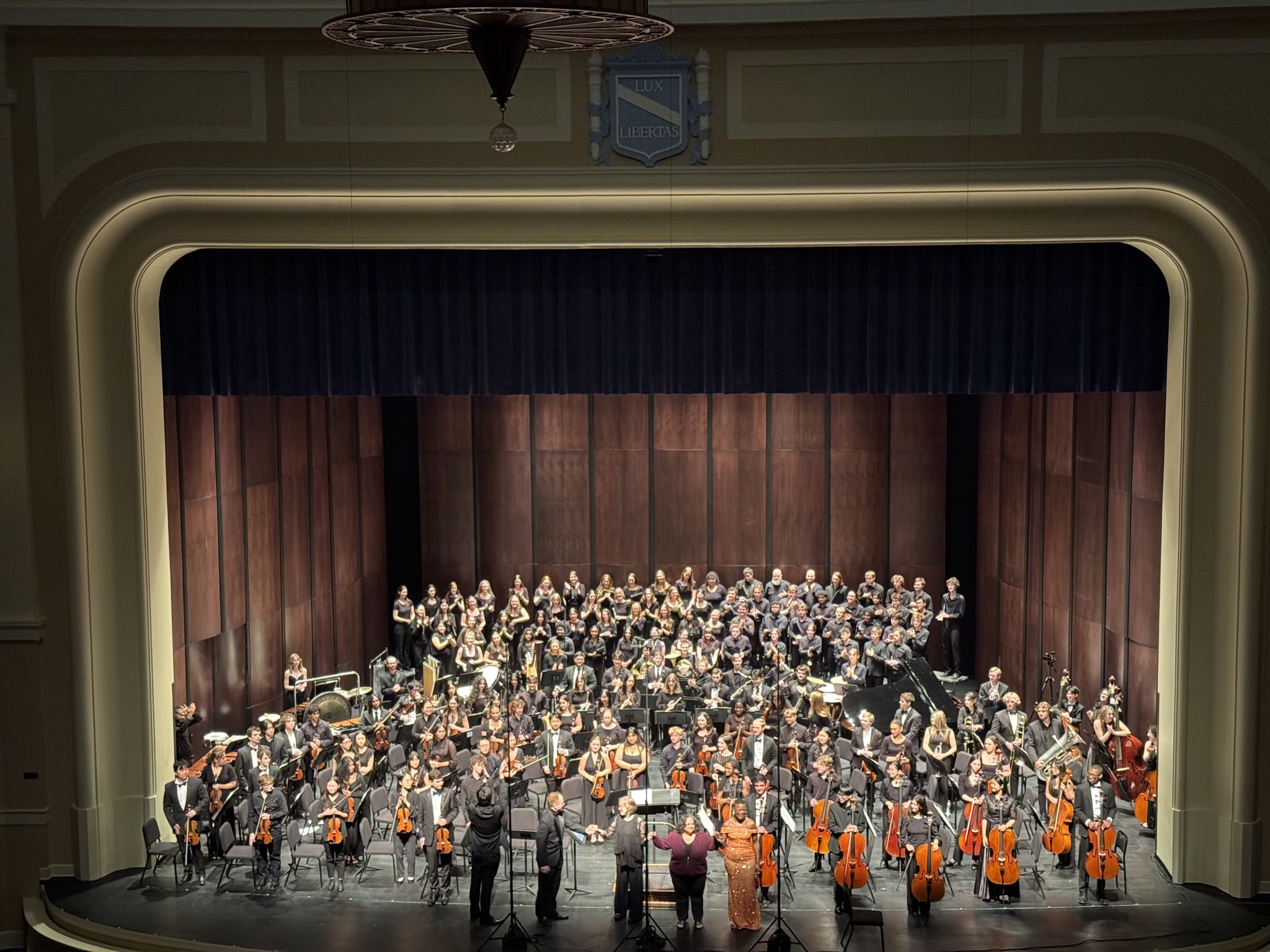
The weekend’s schedule reflected a wide range of musical styles and formats. Solomon described the atmosphere as “a house party unfolding over the course of the weekend, with audiences encouraged to move between events and encounter different listening experiences”. Performances ranged from chamber music to full orchestral and choral collaborations and even a soundwalk developed by Dr. Andrea Bohlman’s MUSC 258 Musical Movements: Migration, Exile, Diaspora class.
Festival on the Hill opened Friday afternoon with bluegrass in the Hill Hall Rotunda to a full crowd, ready to kick off the weekend. It was followed by a salon concert in Moeser Auditorium. On Saturday, the self-guided soundwalk across campus, curated by Dr. Bohlman’s class was highlighted. The soundwalk challenged the listener’s definition of music, encouraging them to find melody and harmony in non-musical spaces. That evening featured the performance of Conquest Requiem in Memorial Hall, followed by a late-night performance in Moeser Auditorium. Sunday featured a “Nostalgia on Period Instruments” recital in Person Hall, centered on nineteenth-century works performed on historic instruments in the afternoon.
North Carolina’s artistic history also informed the festival. DiEugenio noted the state’s role in inspiring influential artists such as Béla Bartók, who composed while living in Asheville, and John Cage at Black Mountain College, alongside prominent North Carolina-born artists including Nina Simone, James Taylor, Caroline Shaw, and Rhiannon Giddens.
The festival weekend also coincided with this year’s UNC-KCL Music Conference. This annual conference alternates each year between UNC and King’s College London and is always an excellent opportunity to bring musicology graduate students and faculty together for a long weekend.
“I’m so excited that during the same weekend as the ‘Speak, Listen’ festival, the UNC-King’s College London partnership will host a symposium in Chapel Hill,” said Dr. Naomi André in an early April interview. “Graduate students from KCL will be able to get to know the specialties of UNC with a broad range of papers at the symposium and concerts that feature the wide-reaching musical genres we’re known for.”
As DiEugenio noted, “‘Speak, Listen’ celebrates many voices, highlights some that may be lesser known, and reaches back in time across the Atlantic as we move forward together in an uncharted future.”
by Makala Pitman
edited and updated by Cat Zachary
Every other year, the UNC Department of Music hosts Festival on the Hill, an event that brings students, faculty, guest artists, and community members together for performances, research presentations, and conversations on campus. In April 2026, the festival centered on the theme “Speak, Listen,” a concept that shaped both the programming and the broader vision for the weekend. Organized by faculty members Dr. Nicholas DiEugnio and Professor Mimi Solomon, with additional help from Dr. Naomi André, the festival’s theme reflects the focus on elevating meaningful musical voices.
Professor Mimi Solomon explained that the festival was “a chance to bring forth different voices that aren’t often heard and deserve to be.” Those voices included composers, contemporary artists, and musicians within UNC’s Department of Music.
The 2026 installment also coincided with the 250th anniversary of the founding of the United States. In a written statement, Dr. Nicholas DiEugenio spoke of “the American condition,” which has allowed composers such as Ruth Crawford Seeger, Amy Beach, Margaret Bonds, Dorothy Rudd Moore, Harry Partch, Conlon Nancarrow, George Crumb, and Duke Ellington to create their music.
At the center of this year’s festival program was the North Carolina premiere of Gabriela Lena Frank’sConquest Requiem (2017). The performance brought together the UNC Symphony Orchestra conducted by Dr. Evan Harger, UNC Chamber Singers, and Carolina Choir directed by Professor Susan Klebanow with soloists LaToya Lain, soprano, and Andrew Garland, baritone. Frank’s residency is a big element of the festival.
Conquest Requiem explores the story of la Malinche during the Spanish Conquest. In the festival statement, DiEugenio discusses la Malinche’s legacy, noting how she has been interpreted in multiple and conflicting ways. The piece brings up ideas of identity, narrative, and culture that are central to the festival.
“Bringing new vibrant art to our community and students is key to our mission as a university,” said Harger. “It was a huge honor to welcome Gabriela Lena Frank to our campus right before her Pulitzer Prize announcement.”
The weekend’s schedule reflected a wide range of musical styles and formats. Solomon described the atmosphere as “a house party unfolding over the course of the weekend, with audiences encouraged to move between events and encounter different listening experiences”. Performances ranged from chamber music to full orchestral and choral collaborations and even a soundwalk developed by Dr. Andrea Bohlman’s MUSC 258 Musical Movements: Migration, Exile, Diaspora class.
Festival on the Hill opened Friday afternoon with bluegrass in the Hill Hall Rotunda to a full crowd, ready to kick off the weekend. It was followed by a salon concert in Moeser Auditorium. On Saturday, the self-guided soundwalk across campus, curated by Dr. Bohlman’s class was highlighted. The soundwalk challenged the listener’s definition of music, encouraging them to find melody and harmony in non-musical spaces. That evening featured the performance of Conquest Requiem in Memorial Hall, followed by a late-night performance in Moeser Auditorium. Sunday featured a “Nostalgia on Period Instruments” recital in Person Hall, centered on nineteenth-century works performed on historic instruments in the afternoon.
North Carolina’s artistic history also informed the festival. DiEugenio noted the state’s role in inspiring influential artists such as Béla Bartók, who composed while living in Asheville, and John Cage at Black Mountain College, alongside prominent North Carolina-born artists including Nina Simone, James Taylor, Caroline Shaw, and Rhiannon Giddens.
The festival weekend also coincided with this year’s UNC-KCL Music Conference. This annual conference alternates each year between UNC and King’s College London and is always an excellent opportunity to bring musicology graduate students and faculty together for a long weekend.
“I’m so excited that during the same weekend as the ‘Speak, Listen’ festival, the UNC-King’s College London partnership will host a symposium in Chapel Hill,” said Dr. Naomi André in an early April interview. “Graduate students from KCL will be able to get to know the specialties of UNC with a broad range of papers at the symposium and concerts that feature the wide-reaching musical genres we’re known for.”
As DiEugenio noted, “‘Speak, Listen’ celebrates many voices, highlights some that may be lesser known, and reaches back in time across the Atlantic as we move forward together in an uncharted future.”
by Makala Pitman
edited and updated by Cat Zachary


